35F Intelligence Analyst vs 35N Signals Intelligence Analyst
Both jobs analyze intelligence behind a clearance, but they work from different raw material. The 35F Intelligence Analyst fuses every source into one threat picture, while the 35N Signals Intelligence Analyst specializes in intercepted communications and electronic signals.
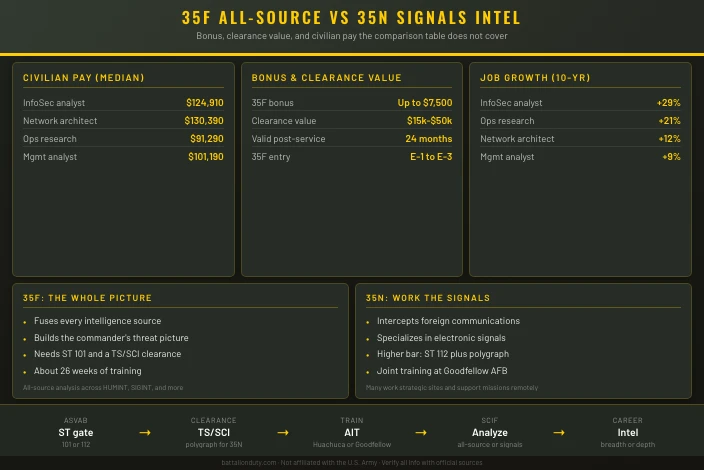
Quick Comparison
| Decision point | 35F Intelligence Analyst | 35N Signals Intelligence Analyst |
|---|---|---|
| Core role | Fuses intelligence from all sources (HUMINT, SIGINT, imagery, open source), produces threat briefings, maintains classified databases, and tells commanders what the enemy is likely to do next. | Intercepts and analyzes foreign communications and electronic signals, maintains the Electronic Order of Battle, and briefs commanders on signals intelligence. |
| Test gate | ASVAB plus a Top Secret/SCI clearance investigation. | ASVAB, plus a Top Secret/SCI clearance investigation and a counterintelligence scope polygraph. |
| Score summary | Skilled Technical (ST) line score of 101 minimum. AFQT 31 (diploma) or 50 (GED). | Skilled Technical (ST) line score of 112 minimum. AFQT 31 (diploma) or 50 (GED). |
| Training path | 10-week BCT, then about 16 weeks of AIT at Fort Huachuca, AZ. Roughly 26 weeks total. | 10-week BCT, then about 25 weeks of AIT at Goodfellow Air Force Base, TX. Roughly 35 weeks total. |
| Work setting | SCIFs, headquarters intelligence shops, and tactical operations centers, almost entirely indoors at a computer on classified networks. | SCIFs at fixed installations in garrison, tactical SCIFs or mobile platforms in the field, and forward operating bases or joint intelligence centers on deployment. |
| Deployment pattern | Roughly 9 to 12 months deployed, then 24 to 36 months at home station, working from brigade or battalion operations centers. | Roughly once every 24 to 36 months for 9 to 12 months. Analysts at strategic sites can support operations remotely without deploying. |
| Best fit | Detail-oriented, analytical people who enjoy solving puzzles with incomplete information, write and brief well, and want strong civilian transfer through a TS/SCI clearance. | Patient, detail-oriented people who like sustained analytical and pattern-recognition work, write clear reports under deadline, and want a TS/SCI clearance that transfers to civilian work. |
| Less ideal if | People who need constant physical activity and hate desk work, struggle with writing, or have financial, drug, or foreign-contact issues that block a TS/SCI clearance. | People who need outdoor or physical work, cannot sit at a screen for long shifts, or have financial, foreign-contact, or background issues that block a TS/SCI clearance. |
If you want to build the whole-of-threat picture from every source, start with the 35F Intelligence Analyst profile. If you want to work the signals side, start with the 35N Signals Intelligence Analyst profile.
Qualification Gates
Both jobs require a Top Secret/SCI clearance, but the 35N sets a higher bar. The 35F needs a Skilled Technical (ST) score of 101, while the 35N needs a 112, and the 35N also requires passing a counterintelligence scope polygraph before you earn the MOS.
That polygraph and higher score make 35N the harder door of the two. Hit your line score first with our ASVAB study guide, since the ST score is the gate that decides which intel jobs you can even pursue.
Work Environment
Both jobs live in a SCIF and run mostly on classified networks. The 35F sits in the operations center, fusing reports into a single assessment that tells the commander what the enemy will likely do next.
The 35N works the signals feed. The job centers on intercepting and analyzing foreign communications and electronic signals, and analysts at strategic sites can support missions remotely without deploying.
Training Path
The 35F pipeline runs about 26 weeks: a 10-week Basic plus roughly 16 weeks of training at Fort Huachuca, Arizona.
The 35N pipeline is longer, around 35 weeks, with about 25 weeks of training at Goodfellow Air Force Base, Texas, alongside signals students from the other services.
Which One Fits You
Choose the 35F if you want the broad analytical job that pulls every source together into one picture. Choose the 35N if you want to specialize in signals and you can clear the higher score and the polygraph.
Both clearances transfer well, and both jobs reward patience and clean analytical writing. The honest split is breadth versus depth: the whole picture, or the signals inside it.
The ASVAB comes first either way. Lock in your ASVAB score, ask a recruiter about the 35N polygraph if it interests you, and compare other Army career guides before you decide.